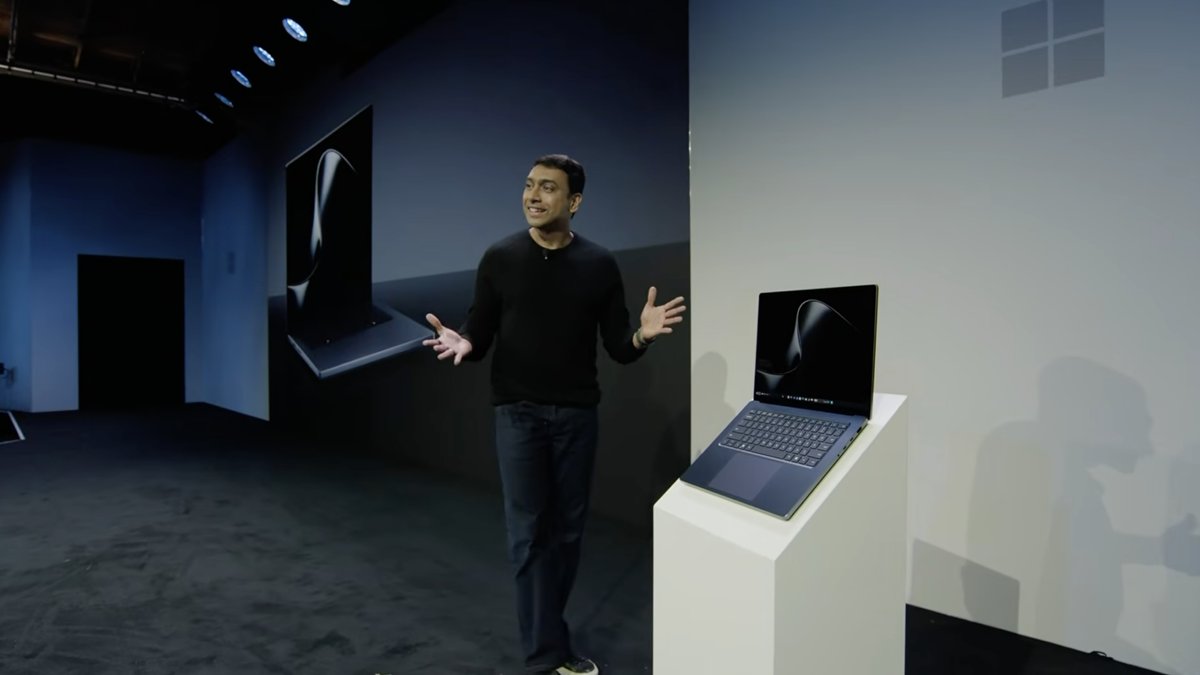
Microsoft revealed new hardware and software advancements during a Surface event on October 7, highlighting the Surface Laptop Ultra, a premium device built to execute local AI tasks efficiently. The company equipped it with Nvidia’s RTX Spark chipset, which it claims delivers superior AI performance compared to the MacBook Pro with M5 Pro. Though positioned for professionals, Microsoft also showcased its gaming potential, demonstrating that Gears of War: E-Day achieves 60 frames per second on the machine. Additionally, Call of Duty support for RTX Spark laptops is scheduled for 2027.
The Surface Laptop Ultra incorporates a bright HDR PixelSense display and the highest number of ports ever included in a Surface Laptop. Microsoft also introduced a magnetic USB-C charger for better compatibility. Other manufacturers, including Dell, HP, MSI, and Asus, will release their own RTX Spark laptops. The Surface Laptop Ultra begins at C$3,899.99 in Canada, with pre-orders open and a release date of October 16. Meanwhile, the Asus ProArt P14 and P16 models start at C$3,499 and C$4,999, respectively, and will ship on the same day.
Alongside the hardware, Microsoft detailed software updates for Windows focused on enhancing AI integration. A central feature is Hybrid Intelligence, which enables GitHub Copilot to direct AI requests to local models when feasible, reducing dependence on cloud-based solutions. If no local model is available, Copilot defaults to cloud processing. This setup allows Copilot to interact with files stored on a user’s device, such as organizing tax documents, creating compressed folders, or drafting emails, while keeping data on the machine.
Microsoft also announced improvements to Windows Search, including quick actions that users can execute directly from search results. These actions range from launching applications to adjusting system settings or sending messages. Copilot is now integrated into the search function, letting users pose questions directly from the taskbar. The company further claims Copilot can now generate fully functional native apps from a single prompt, which users can run locally.
Security enhancements include the ability to isolate AI agent activities from user actions, allowing for different security protocols for each. Windows Defender will also detect prompt injection attacks, where malicious inputs manipulate AI models into performing unintended tasks. However, Microsoft’s demonstrations left some implementation details unclear, prompting questions about practical effectiveness.



Leave a Reply