Throughout 2025, the world economy adapted to trade disruptions, supply chain adjustments and rapidly evolving policies that outpaced many businesses’ ability to respond. Growth remained stable not because those challenges were resolved, but because of underlying momentum. The International Monetary Fund increased its 2026 global growth projection to 3.3% in January, crediting the persistence to tailwinds from the AI and technology investment boom.
Interestingly, the same innovations driving economic expansion are now reshaping the fundamental operations of international trade. Software systems now automatically process customs documentation, origin certificates, shipping bookings, insurance paperwork and payment verifications—acting rather than advising.
Transforming Global Trade Trends
This transition holds special significance for India, where smaller businesses now represent an expanding portion of total merchandise exports. What was once exclusively available to major trading firms with dedicated compliance teams is now accessible to companies lacking such resources.
Trade specialists have consistently emphasized that the greatest obstacle to cross-border commerce isn’t tariffs themselves, but the administrative burden of demonstrating compliance. A single shipment can require dozens of documents, each requiring validation by different authorities, each capable of delaying cargo at a port due to a mismatched code or a missing attestation.
AI has made particularly rapid progress in this area because the required tasks are highly structured and governed by clear rules. Modern systems now analyze invoices and packing lists, automatically assign proper tariff classifications, check them against destination country regulations, flag inconsistencies before submission, and respond to customs queries without a human transcribing anything.
Economic Implications of AI in Trade
The financial impact of these changes is substantial. According to World Trade Organization projections, AI could boost global trade volumes by 34-37% by 2040, with corresponding global GDP growth of 12-13%, primarily through reduced trade costs rather than increased demand.
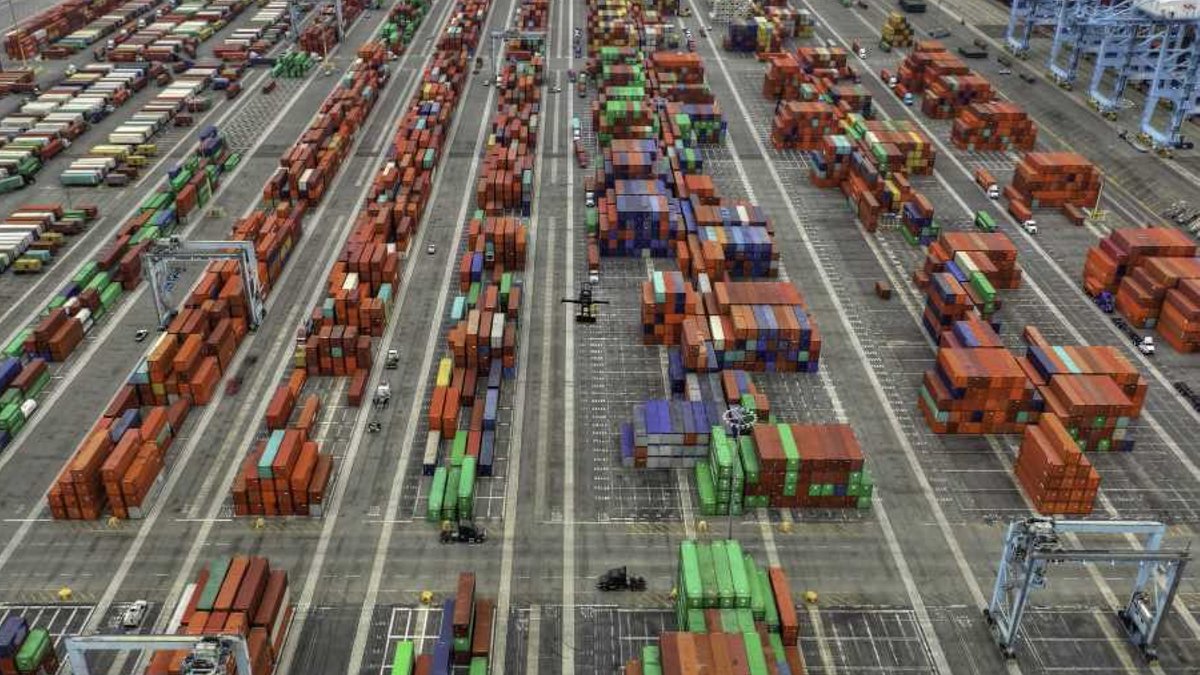
However, accelerating paperwork processing merely shifts the bottleneck to the physical movement of goods. New visibility platforms now determine not just where containers are located, but what actions should be taken regarding them. For example, when a shipment misses its scheduled vessel, an automated system can evaluate alternative routings, weigh the cost of air freight against the penalty for late delivery, raise the booking, update the customer, and reconcile the revised invoice against the original purchase order once it arrives.
Emergence of AI Trade Agents
Specialized AI agent services have adopted these operational responsibilities, handling follow-ups, scheduling and coordination tasks that previously consumed significant operational time. These systems operate under strict policy controls rather than relying on unchecked autonomous behavior. Compliance checks run before an action is taken, not after it is queried.
Access permissions are role-based, determining which agents can finalize bookings versus those that can only prepare them. Exceptions route to a person when a disruption falls outside what the agent was built to handle, and rollback reverses an action that should not have been taken, while the record of what happened stays available to finance and audit.
For established exporters, these systems represent efficiency improvements. For smaller businesses, they create entirely new competitive possibilities. In India‘s fiscal year 2026, MSME-linked products accounted for 50.60% of merchandise exports—up from 48.55% the previous year.
New Opportunities for Indian Exporters
Yet these companies typically operate without the compliance infrastructure, logistics departments and legal support that larger exporters maintain as standard operations. A single rejected customs declaration can occupy a founder’s time for an entire week.
Software solutions that manage classification, documentation filing, carrier coordination and payment follow-ups can level this playing field more effectively than any government subsidy. WTO analysis demonstrates the potential impact: under universal AI adoption, low-income economies could see trade growth of 18.1 percentage points by 2040, compared to 6.5 points where adoption remains uneven. The benefit is real but conditional, and the condition is access.
The enterprises that gain most from this will not be those that adopt earliest. They will be those that are clearest about which trade decisions can be delegated and which must stay with a person who can answer for them.





Leave a Reply