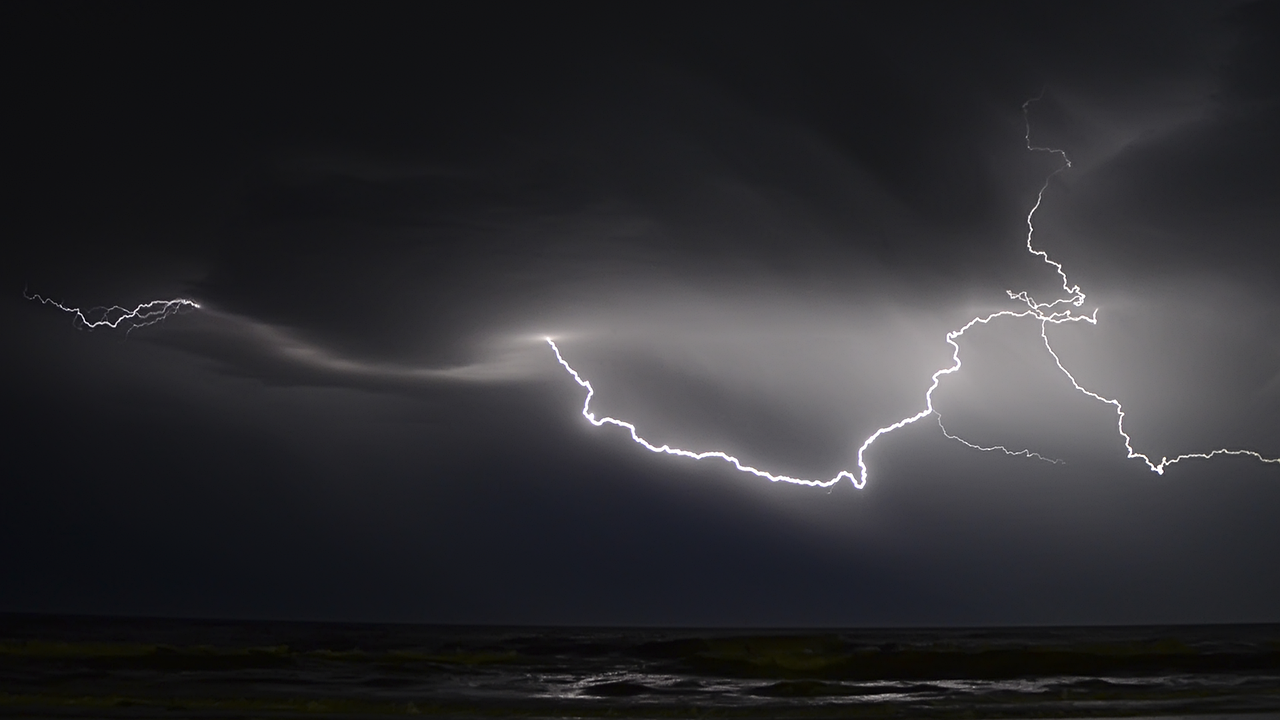
A lightning strike entered a residential apartment through the coaxial internet cable that connected the building to the cable provider’s network. The surge traveled directly into a gamer’s PC, causing extensive damage to the motherboard, destroying the router, and leaving visible burn marks on the wall near the cable entry point.
The surge path through a coaxial cable
Coaxial cables — the standard lines used for cable internet and TV — can act like antennas during a lightning storm. When lightning hits a nearby pole or the cable itself, the electrical surge travels along the copper core directly into the home. Unlike a power line, which typically has some surge protection at the breaker panel, coaxial lines often lack any built-in grounding.
Related: Corsair unveils lightweight budget-friendly HS35 v3 headsets
In this case, the surge entered the apartment through the wall jack, exited the cable modem, and passed through the Ethernet cable into the computer. The router was completely fried. The PC’s motherboard showed scorch marks, and a section of the drywall near the jack was blackened. The damage was immediate and total. The motherboard, power supply, and graphics card were all destroyed. The router’s casing had melted plastic. The homeowner said the system was in sleep mode when the strike occurred.
Damage to the PC and router
Surges that enter through network cables are often more destructive than those from the power grid because they bypass most common surge protectors. Many power strips and UPS units only protect the AC line, not the coaxial or Ethernet jacks. The gamer’s setup had a basic surge protector for power but none for the cable line.
The motherboard sustained the worst damage — multiple capacitors were blown, and the traces on the board were visibly burned. The Ethernet port on the PC was charred. The router’s processor and radio chips were dead. Both devices had to be replaced entirely. One thing that stood out was the burn marks on the wall. That suggests the surge was powerful enough to generate significant heat at the point of entry, possibly arcing across a small gap inside the wall jack.
Related: Cooler Master introduces active cooling DDR5 RAM kits
Grounding and protection options
Experts recommend that any coaxial cable entering a home be grounded at the point of entry using an approved grounding block. This is often installed by the cable company during initial setup, but many older apartments lack proper grounding. In new construction, local codes may require it — but enforcement varies. Another layer of protection is a surge protector with built-in coaxial and Ethernet ports. These devices are designed to clamp down on voltage spikes that travel through data lines. They are not foolproof; a direct or very nearby lightning strike can overwhelm even the best protectors. But they offer significantly better odds than leaving the cable unprotected.
The incident also highlights a less obvious risk: even if a PC is turned off, the surge can enter through network cables and damage components that remain connected to them. In this case, the system was in sleep mode, meaning the motherboard still had power to some circuits. That likely worsened the damage.
A broader look at lightning damage patterns
Lightning strikes account for a small but consistent percentage of home electronics failures each year. According to the National Fire Protection Association, lightning caused an estimated 24,000 fires in U.S. homes between 2007 and 2011 — and many more unrecorded cases where only electronics were lost. Surges through data cables are a known but often overlooked vector. The coaxial cable, in particular, is a straight line from the outside world to the heart of the home network.
Related: SMIC, AMEC CEOs Urge Domestic Chip Tool Tests on Production Lines
A few years back, a similar case made the rounds on tech forums: a gamer in Florida lost two monitors and a PC after a strike entered through the cable modem. In both instances, the victims described a loud pop and the smell of burning electronics. The aftermath was a mix of frustration and surprise — surprise because power surge protectors were in place, but the data lines were left exposed. The repair costs in this latest case were estimated at around $2,500 for the PC and $150 for the router. Insurance covered part of it, but the homeowner had to pay a deductible and wait weeks for replacements. The apartment building’s management later confirmed that the cable entry point had no grounding block installed — a violation of the building’s original wiring specs, but one that had gone unnoticed for years.
For anyone with cable internet, the takeaway is simple: check if your coaxial line has a grounding block outside the building. If it doesn’t, call the internet provider and insist on one. Then buy a quality surge protector that covers both power and data lines. No single fix is guaranteed, but stacking these measures reduces the odds of a $2,500 surprise after the next thunderstorm.





Leave a Reply