Starcloud is proposing a mission to send a spacecraft to Alpha Centauri, a journey that would take roughly 80,000 years to complete. The founders, Philip Johnston, Adi Oltean, and Ezra Feilden, describe this venture as a non-profit mission in the spirit of human exploration designed to test the limits of the Fermi paradox, which seeks to explain why we haven’t found intelligent life in the universe. The goal is to place the first human-built object aimed at another star, specifically the closest to our solar system.
Orbital Datacentres and the Fermi Paradox
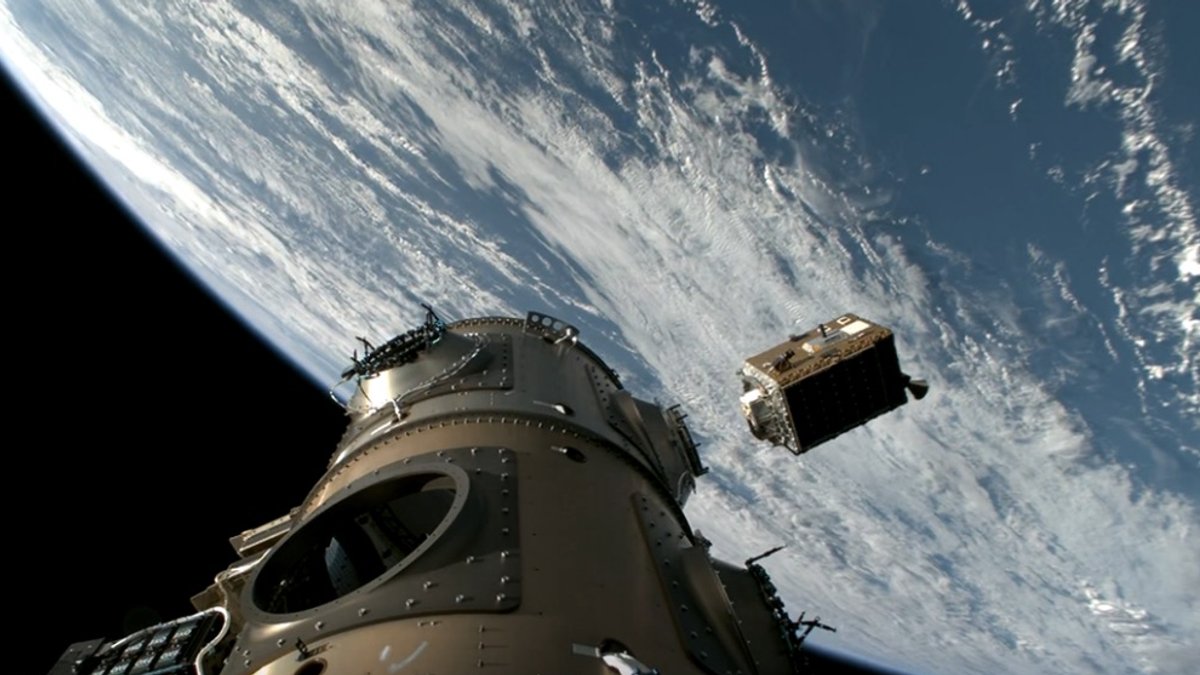
Elon Musk isn’t the only one discussing datacentres in orbit. The Redmond-based Starcloud has plans to launch 88,000 satellites to power these facilities, and it has already deployed a test satellite carrying an Nvidia H100 GPU. Starcloud-1, launched in November 2025, was positioned by a SpaceX Falcon-9 rocket as the “first deployment of a datacentre-class GPU compute in orbit.” The company, which achieved a $1.1 billion valuation in 17 months to become the fastest unicorn in the Y Combinator portfolio, is now pivoting this momentum toward interstellar travel.
The mission aims to send a one-kilogram spacecraft with a ten-centimetre payload into interstellar space. Johnston, a former McKinsey employee, Oltean, who worked at both Microsoft and SpaceX, and Feilden, who cut his teeth at Airbus Defence and Space, believe they can use proven space technologies to achieve this. The project is expected to cost about $15 million and is targeted for a 2029 launch. The group is currently actively seeking vendors to build the craft, funds to pay them, and partners to identify scientific and artistic payloads.
Related: Meta Faces New Setbacks
Starcloud’s plan involves moving to Alpha Centauri, located 41 trillion kilometres away. This distance is significantly greater than the 26 billion kilometres travelled by the Voyager probes, which entered interstellar space in 2012 and 2019 respectively. The founders argue that because they aren’t concerned with achieving success in a human lifetime, the costs are lower and the outcomes can be assessed by future generations. Johnston notes that a metal box can survive the radiation environment for 50,000 years, similar to how dinosaur bones have lasted 200 million years.
The founders emphasize that their approach relies on existing technology rather than pushing the frontiers of innovation. While a previous non-profit mission called Breakthrough Starshot, founded in 2016 by Yuri Milner with Mark Zuckerberg’s backing, aimed for the same destination, it fell through in 2025. Starcloud’s strategy differs by utilizing proven tools and accepting that the timeline extends far beyond any single human existence. If a dinosaur bone can last 200 million years, the logic follows that a metal box can endure the radiation environment for 50,000 years. The company is positioning itself as a return to the spirit of human exploration, though it remains to be seen if this non-profit activity will convert into real action on the orbital datacentre story.




Leave a Reply