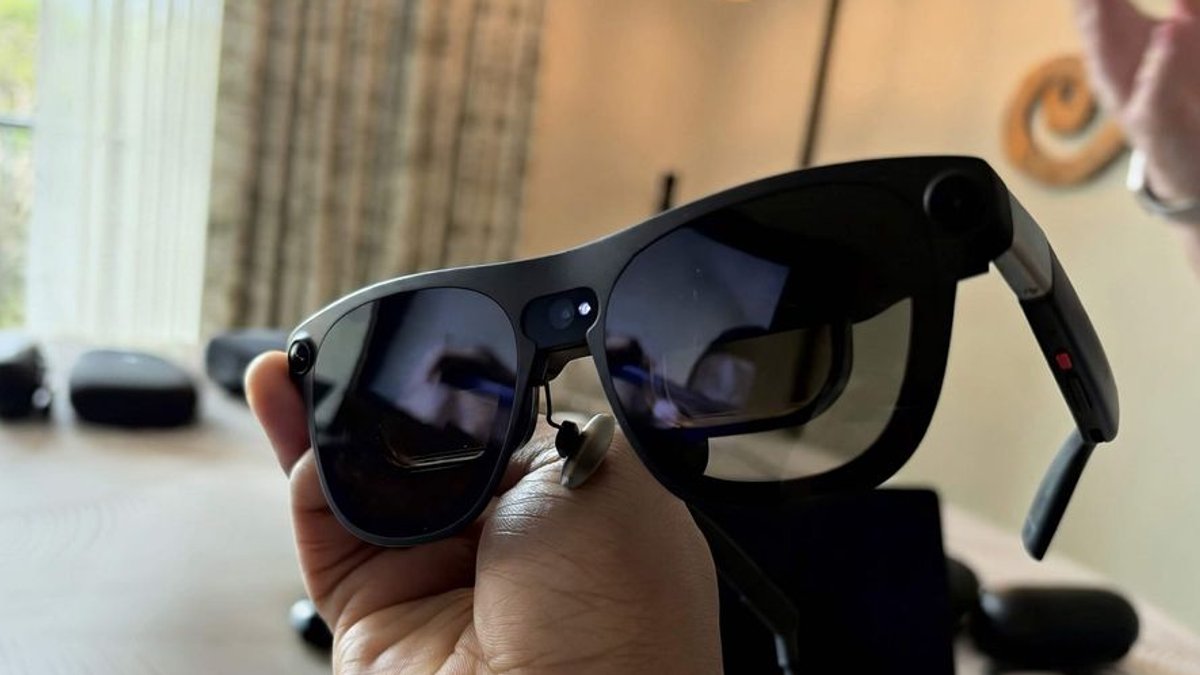
Xreal has announced more details about the upcoming Aura tethered smart glasses. The company states that the official release date is “just weeks away,” though a specific schedule has not yet been set. The device will initially launch in the U.S., Canada, Japan, and South Korea.
Hardware and Pricing
Two variants of the Aura will be available at launch. The 12GB+256GB model is priced at $1,829, while the higher-end 16GB+512GB option costs $2,149. A reservation system is in place, with eligibility limited to those who claimed a spot before October 7.
These glasses use a split-compute architecture that pairs comfortable optical see-through frames with a tethered compute puck. The puck can be worn on a lanyard or clipped to a pocket. It also functions as a trackpad for navigation. The device runs Android XR and supports Google Play apps. It features Sound by Bose, hand tracking, and a 70-degree field of view.
Hands-On Experience
During a recent Qualcomm Summit 2026, a reporter had the opportunity to test the Aura again. The hands-on session focused on the device’s ability to interact with on-screen content. When viewing GarageBand on a connected MacBook, the glasses could analyze the interface and answer questions about how to begin using the Apple application. This functionality relies on the Aura’s cameras and integration with Gemini.
Read Also: Gaming Expo Returns to Ontario This Month
Another test involved a medical application designed for professionals. This tool allowed the user to visualize a human brain in three dimensions. The software let users dissect the brain and inspect it from various angles. The reporter noted that the computing power required to run the app caused the puck to heat up significantly.
Beyond professional tools, the Aura can run immersive view experiences. During a test, the user explored the Brooklyn Bridge in a virtual environment. The ability to look around and move within the space created a convincing sense of presence. The reporter noted that the gesture controls, which rely on pinching and hand positioning, felt intuitive and familiar.
The tethered design is a deliberate choice. While the glasses are not wireless, the reporter values the lightweight build and the option to secure the compute puck to a belt clip. The device represents a step toward more capable wearable technology, even if it does not yet offer the freedom of a completely standalone unit.


Leave a Reply