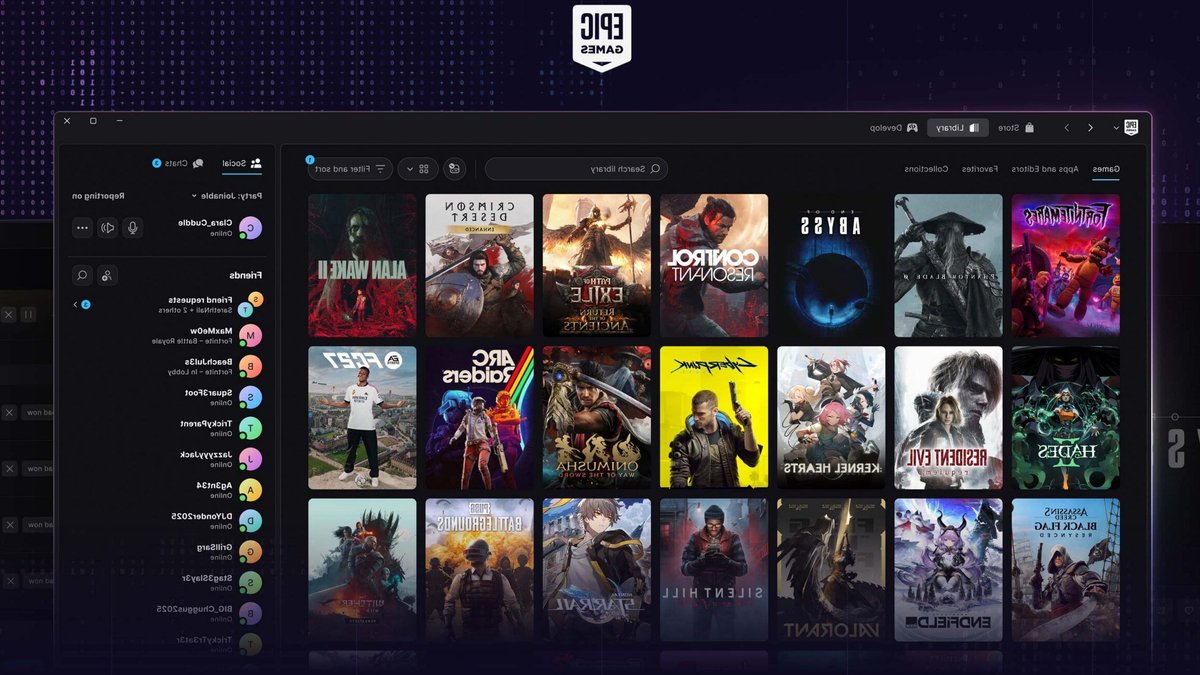
Epic Games announced a redesigned version of its game launcher, marketing the update as “vibe-coded” and claiming faster performance than competitors. The company highlighted a launch time of 5.47 seconds, positioning the app as an improvement over its predecessor. A day later, Steam’s updated version demonstrated a quicker startup, registering around 5.23 seconds in user testing, according to Valve’s patch notes.
Testing Claims and Counterpoints
To support its claims, Epic Games commissioned Keyword Studios to conduct comparative tests across 13 machines, excluding the three lowest-spec PCs. The results showed Epic’s new launcher starting in 5.47 seconds against Steam’s 10.07-second average. However, these findings contrasted with Valve’s own performance metrics, which showed Steam’s improved startup time. A separate test by the article’s author on a personal machine recorded Steam launching in approximately 6.25 seconds, highlighting the variability influenced by hardware and system conditions. Epic’s own promotional materials included a tweet from @girlglock_ noting the rapid response, which showed the competitive pressures between the platforms. Of course, we’re only going off limited tests here, and a variety of factors can influence start times.
Platform Choice Beyond Speed
Social media reactions reflected this sentiment, with users questioning the relevance of such metrics in platform selection. One Twitter user remarked that Epic’s claims were undermined by Steam’s rapid response, while another suggested that Epic’s presence in the market stems more from exclusive titles than technical performance. The whole launch time thing is really silly, and Valve’s quick response to undermine Epic’s claims by improving Steam’s start time is honestly pretty funny. @Wario64 Oh yeah Epic Games the reason we all use Steam is because of how fast it launched — Phil Miyamoto (@PhilMiyamoto) October 14, 2026.
Criticisms of Epic’s Strategy
Epic’s efforts to boost its store’s appeal extend beyond technical tweaks. The company has faced criticism for its exclusive game deals, limited features, and CEO Tim Sweeney’s public stances on AI. Earlier this year, Epic laid off 1,000 employees, a move Sweeney attributed to factors other than AI adoption. The company has also promoted AI tools for developers, urging a shift away from manual coding and artistic creation, a stance that has sparked debate among gamers and creators alike. This approach has drawn ire, particularly when Epic itself admitted that “programming is hard,” as seen in its delayed addition of a shopping cart, a standard feature that took years to implement.





Leave a Reply