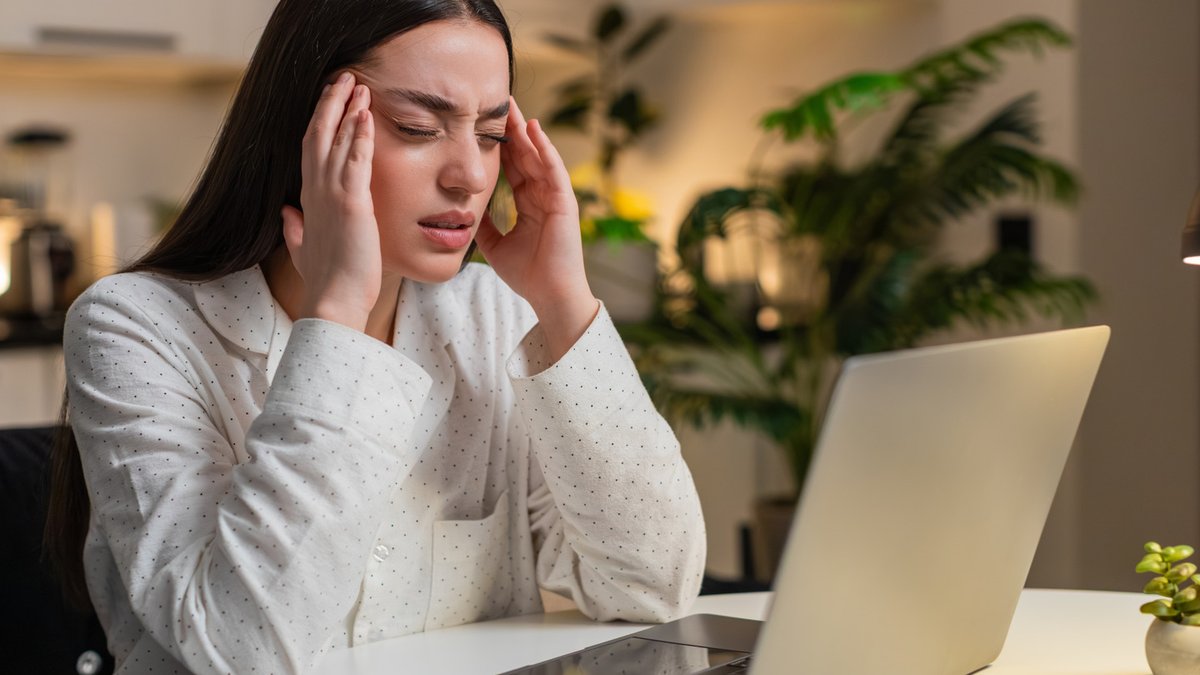
Reducing eye strain requires adjusting monitor settings to lower brightness and use warmer colors. Many people spend a statistically significant portion of their day with a brightly lit rectangle right in front of their face, which can cause fatigue. While proper placement and rest breaks help, the first measures you should take are adjusting the monitor’s internal settings. A reduction in brightness and the use of warmer color temperatures can make a surprisingly big difference in how much of a beating your eyes take over the course of a workday.
Most monitors tend to ship with their brightness settings cranked up high, as a brighter monitor looks better on display in a store. If there’s a visible, ambient halo of glow emanating from your screen at all hours of the day, and especially when it’s darker out, that’s probably too bright. Using either your monitor’s physical controls or your computer’s settings, turn the brightness down so it’s about the same level of brightness as the room around you.
A great tool to help in this endeavor is dark mode. Many websites and apps come with a dark mode toggle that trades most of the bright, white colors for much softer blacks and grays. If anything you’re using has a built-in dark mode, turn it on to reduce eye strain associated with brightness. Even if you’re using something that doesn’t have a dark mode, such as Google Docs, there may be homebrew solutions like add-ons or extensions. In the specific case of Google Docs, there’s a browser extension called DocsAfterDark that automatically flips the background and text from white and black to black and white.
Related: Google Wallet Could Solve Age Verification Issue
In addition to setting the flat brightness of your monitor, you should also take the time to tweak your contrast settings. All monitors express light and dark in a different contrast ratio, with a higher ratio meaning that your monitor is capable of expressing brighter whites and deeper darks. If your contrast is too low, text and images may appear blurry and unfocused, forcing you to squint harder at your monitor for longer stretches to actually see anything.
If you’ve got higher contrast settings available on your monitor than the default, consider using them. Setting the contrast higher sharpens text and images, making these elements easier to see without having to focus so much, which should generally be less harsh on your eyes. Of course, your monitor’s contrast setting can only go so high, so if you’re finding it difficult to see what’s on your screen even with the contrast maxed out, try adjusting your PC environment in similar ways, like turning down overbearing ambient lighting or placing your monitor in an optimal position.
Switch to warmer color temperatures
A color monitor can display text and images in all kinds of colors and shades, but a large portion of that color is naturally going to be blue light. Constant blue light exposure, while helpful for keeping you awake and engaged during the day, can feel harsh, and some studies suggest it may interfere with your brain’s ability to produce sleep-aiding melatonin. Ergo, one of the best things you can do for your comfort is to cut down the blue light as much as possible.
Related: OnePlus to end US phone sales next year
Using your monitor’s settings, try adjusting the color profile or toggling a blue light filter. Using warmer colors, especially later in the day when it’s already dark out, can reduce blue light exposure and keep it from potentially hampering your sleep. Unfortunately, color temperatures can be a little tricky to just eyeball, and there’s no universally better setting for all times of day. If you’re having trouble getting your monitor color to a comfortable setting, homebrew solutions can once again help you out. There’s an app called f.lux, which automatically tweaks your monitor’s colors based on the current time of day, with cooler, sunlight-like colors in the morning and warmer, softer shades at night.
While these adjustments help, they don’t fix the issue of having to physically lean in to see details. If you are constantly leaning forward to read text on a screen, you are increasing the distance between your eyes and the light source, which ironically defeats the purpose of lowering the brightness. It is also worth noting that text size is often overlooked in favor of screen calibration, yet a font that is too small forces the eye to work harder regardless of color temperature. Finding a balance where text is large enough to read from a standard distance is just as important as turning down the blue light filter.
Use large, legible fonts and zoom in windows
As we mentioned with the matter of contrast, having to squint and lean in to focus extra hard to read something on your screen means getting an even bigger face full of harsh light than you normally would. Not only can low contrast bring this about, but it can also come as a result of small or unusual text fonts. As impressive as it is for a monitor to display large quantities of text, if that text is too small to actually comfortably read, it’s not doing anyone any favors.
Related: Warp Drive Theoretically Possible at Huge Cost
If you’re working on a document or using any kind of application where you can customize fonts, try using a larger font size that you can clearly see without having to squint or actively focus. You should also use a simple and straightforward font like Arial or Calibri, as opposed to anything elaborate or fancy. If you’re just browsing through text articles online and can’t change the font size yourself, you can also just zoom the window in a bit until you can clearly see it. All web browsers let you do this; just hold the Ctrl key on the keyboard and scroll the mouse wheel up and down to reach your ideal zoom.
Your monitor’s resolution determines the size of the pixels that make up its picture. Lower resolutions mean your display becomes more pixelated and indistinct, which once again leaves you squinting to try and make things out. Most modern monitors always run at their highest setting, but certain kinds of apps and games can force the resolution lower, and it may not always change back afterward. Check your display settings to ensure the resolution is maxed out and you’re getting the best picture quality you can.


Leave a Reply